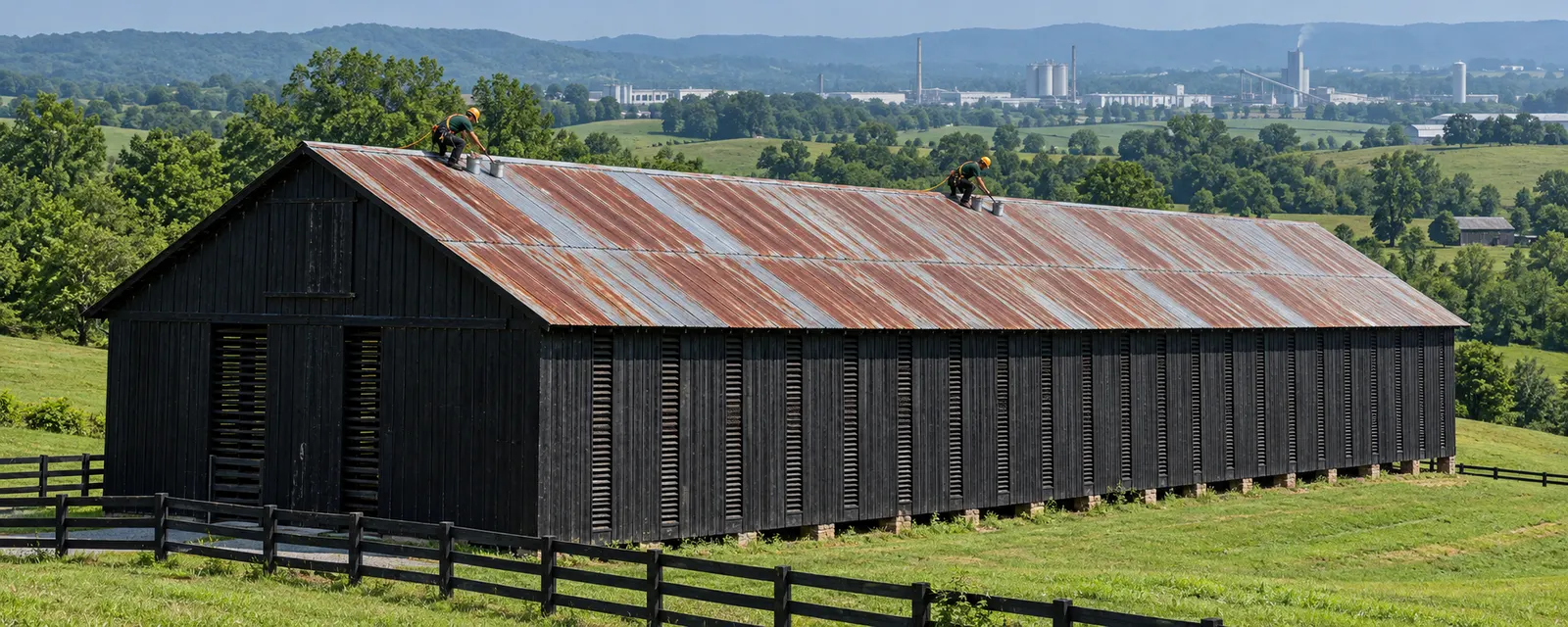
Metal Roof Coating
Our core service for R-panel and standing seam roofs: rust treated, screws replaced or sealed, laps taped, then a base coat and topcoat across the whole field.
Metal roof coating details
We clean, repair, and coat commercial metal roofs in Georgetown and nearby towns. Every metal roof coating job starts with a walk of your roof.
Most leaks on a commercial metal roof start in one of five zones. Here is what each zone looks like when it needs work.
Rust starts at the bottom of the panel run, where water and leaves sit longest. Gutter seams split, outlets clog, and overflow backs up under the eave trim and into the wall.
Thousands of exposed screws hold an R-panel roof down. Each rubber washer dries and cracks with age, and heat cycling loosens the grip until water follows the screw shank inside.
Side laps run up the slope and end laps cross it. End laps take the full flow of the panel run above, so dirt packs in, rust opens the joint, and drips appear mid-building.
Caps along the ridge lose screws and foam closures, letting wind drive rain underneath. Rake and eave trim lift at loose fasteners, and building corners take the hardest gusts in a storm.
Fiberglass skylight panels yellow, turn brittle, and leak at their laps. Rooftop unit curbs, exhaust fans, and pipe boots open at the seams where they meet the panel ribs.
We apply five coating systems. Each card says where one fits, and the table below matches them to the buildings we see around Scott County.
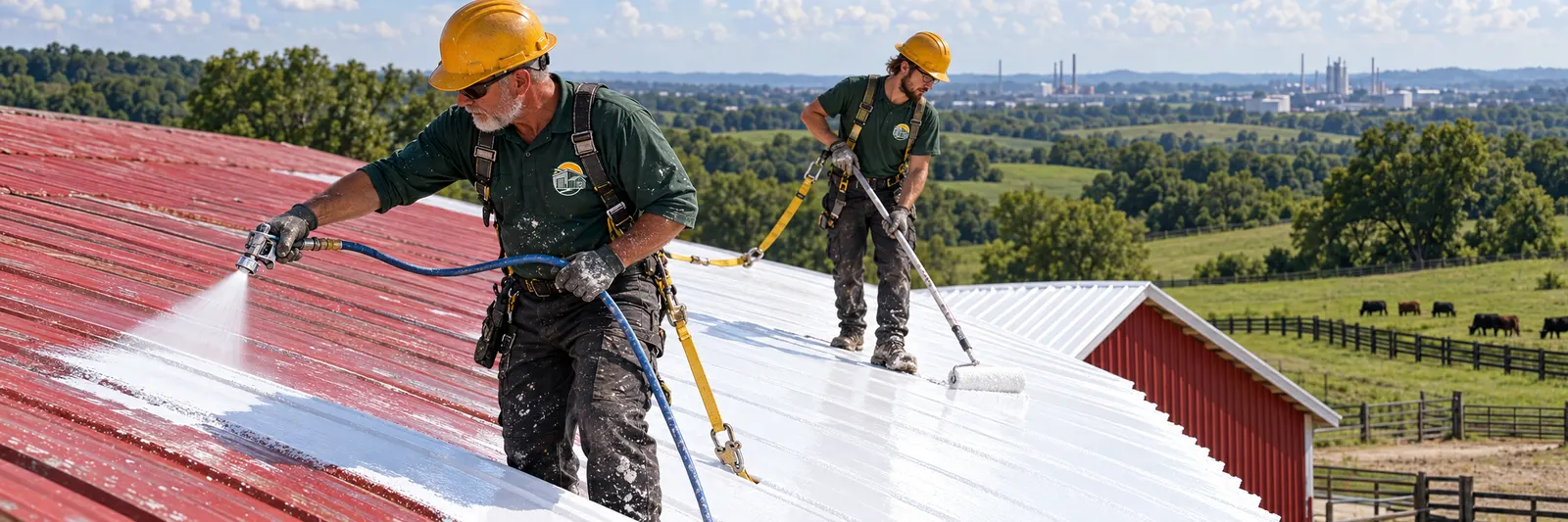
Our core service for R-panel and standing seam roofs: rust treated, screws replaced or sealed, laps taped, then a base coat and topcoat across the whole field.
Metal roof coating details
Low-slope metal where water sits after rain, such as gutter lines, flat spots behind units, and hail-dented panels, gets a silicone system that holds up under ponding.
Silicone coating details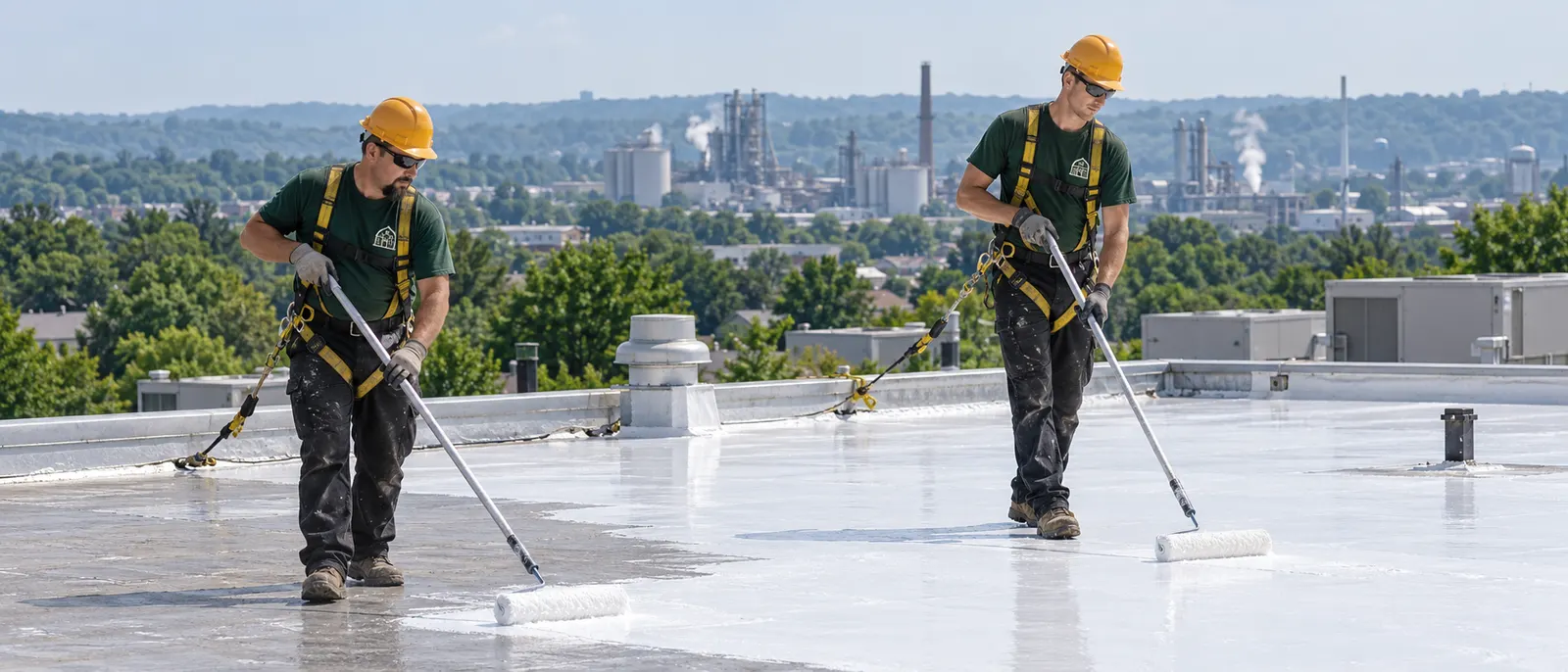
Gabled shops, barns, and pre-engineered warehouses that shed water quickly take a water-based acrylic that stays bright white and recoats easily later.
Acrylic coating details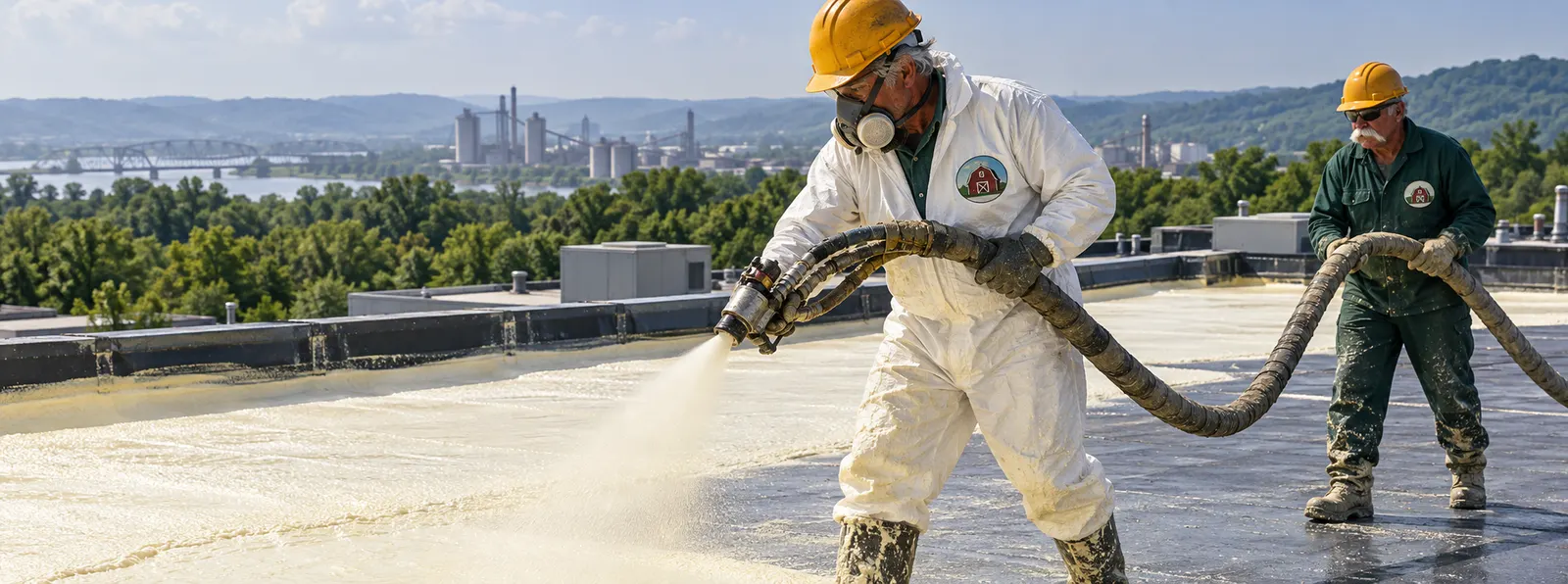
Hot or drafty metal buildings get closed-cell foam sprayed over the panels, burying every screw and lap, then a protective topcoat over the foam.
Spray foam roofing details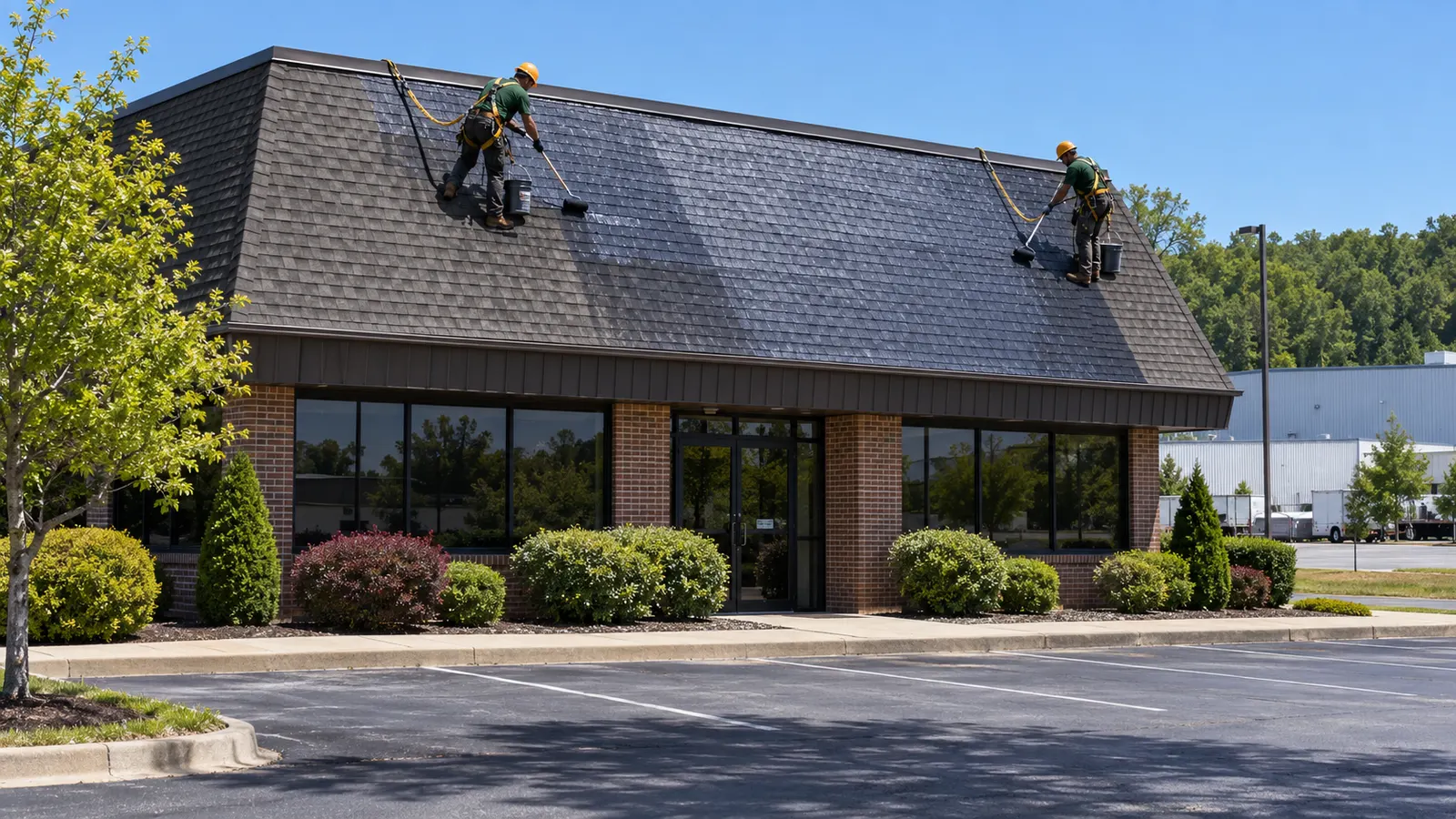
Commercial shingle roofs on strip centers, offices, and churches take a thin flexible coating when the shingles lie flat and still hold their granules.
Shingle coating details| Building | Metal Roof Coating | Silicone Roof Coating | Acrylic Roof Coating | Spray Foam Roofing | Shingle Roof Coating |
|---|---|---|---|---|---|
| Plants And Warehouses | Long R-panel runs, many screws | Water at gutter lines | Rarely | Adds insulation over the deck | Rarely |
| Shops And Metal Buildings | Rusty screws and end laps | Rarely | Pitched panels that drain fast | Shops that run hot | Rarely |
| Barns And Equipment Sheds | Laps, ridge caps, gutters | Rarely | Low odor near animals | Rarely | Rarely |
| Strip Centers And Offices | Metal canopies and back roofs | Flat sections behind units | Rarely | Rarely | Flat shingles with granules |
| Churches And Halls | Metal wings and additions | Rarely | Pitched metal over halls | Rarely | Mansards and steep sections |
| Low-Slope Metal Sections | Seams and fasteners first | Holds up under standing water | Rarely | Tapered to fill low spots | Rarely |
Coating works on steel that is still attached and solid. Rust you can push through, or wet insulation, points to bigger work first.
Call and tell us where the drips show up inside, how long the panel runs are, and whether the screw heads look rusty. We will set up a walk of your roof.
These are the changes owners notice once the panels, screws, and laps carry one continuous coat.
Water has to get past a single membrane instead of every screw hole and lap. Detail coats and fabric go over the joints first, so the field coat bridges them.
Treated rust spots and primed laps sit under the coating, out of the rain and dew that feed corrosion. Rust bloom at fasteners and eaves stops spreading across the panel.
A white topcoat reflects more sunlight than faded or rusty steel, so panels run cooler on summer afternoons and pass less heat into shops and the upper air of warehouses.
Panels, purlins, and insulation stay in place, and the building keeps operating underneath. Old steel and insulation stay out of the landfill while crews work section by section.
Every job follows the same work order, from the first roof walk to the final thickness check.
We walk the panels, check screws and laps, look at gutters and skylights, and view the underside from inside where we can. Moisture readings show whether the insulation below is dry.
On The Roof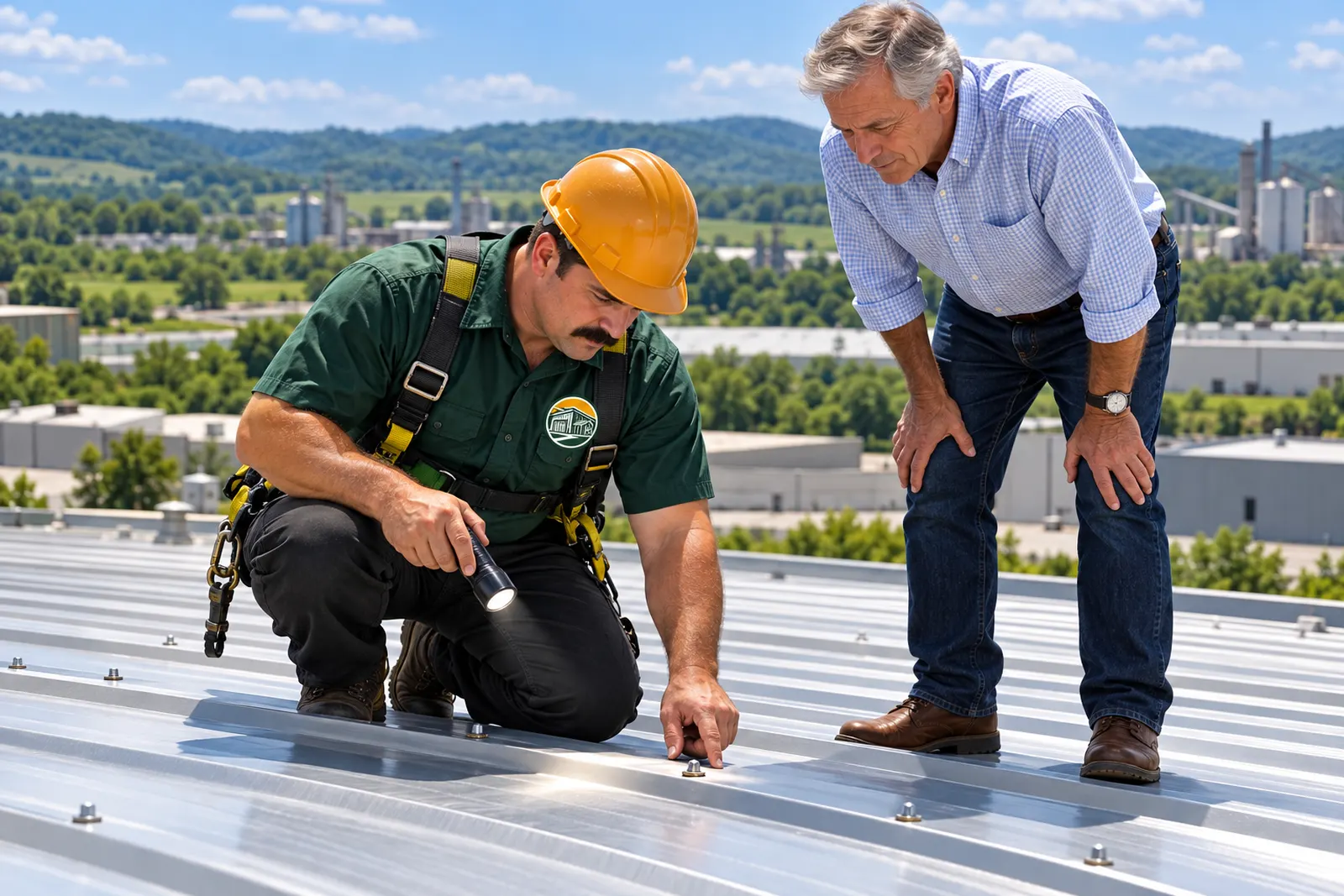
Ladders or a lift go away from customer entrances, parking under the work is cleared, and rooftop units near spraying are shut off. Large roofs are split into sections around shifts and docks.
At The Building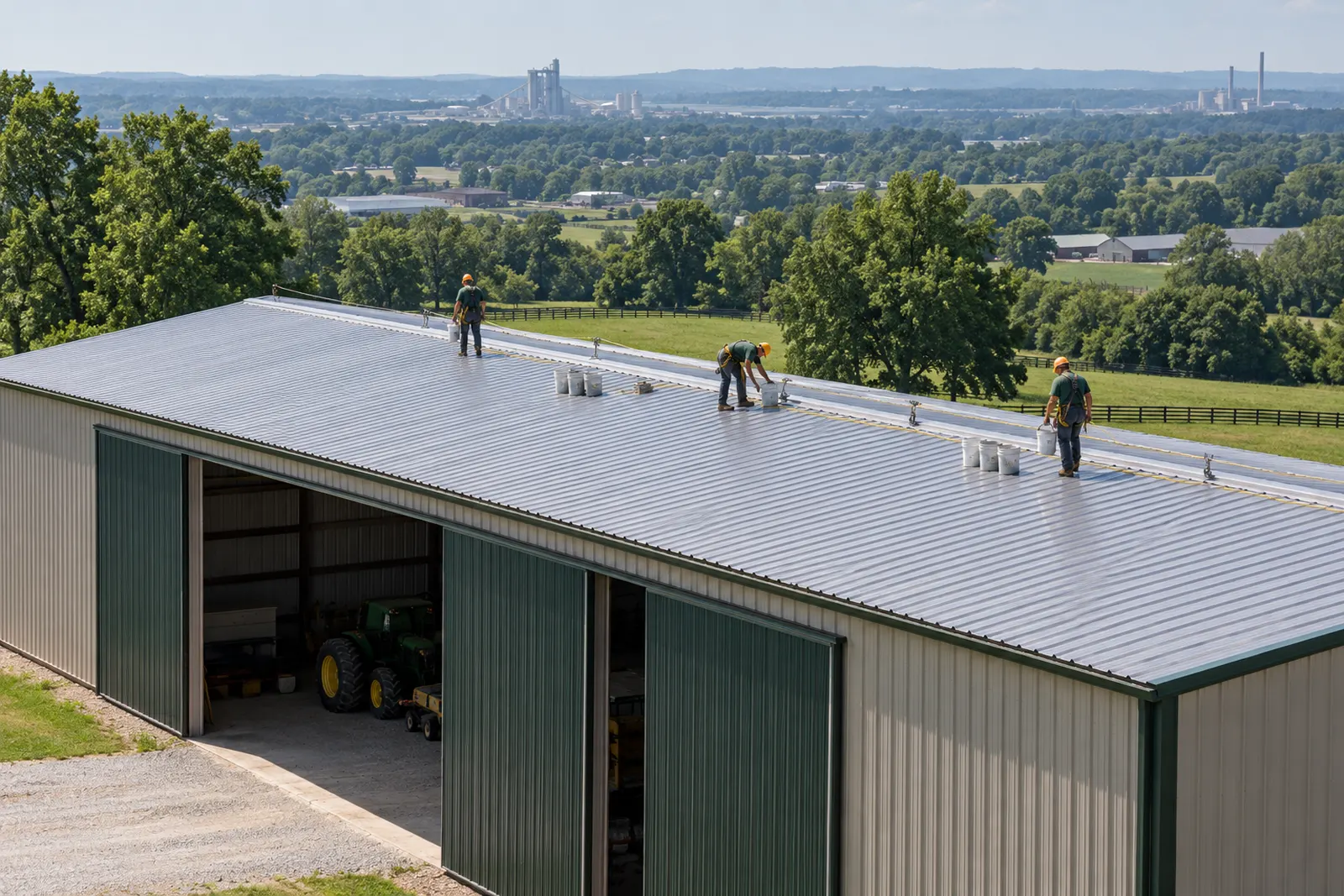
Pressure washing strips dirt, chalky paint, and loose rust. Rust bloom is brushed and primed, loose screws are tightened or replaced, and laps, curbs, and ridge caps get mastic or fabric.
On The RoofSpray or roller passes cover the flats and the ribs, with extra material at seams and fasteners where movement and water concentrate. Coating stops short of vents, nameplates, and condensate drains.
On The RoofWet film gauge readings, gallons used against the roof area, and photos of each section go into a short record for the owner, which helps with later inspections and any tax questions.
PaperworkBuilding outside the towns below? Call us or send us a message. We coat commercial metal roofs in Georgetown, Midway, Cynthiana, and Williamstown.
| Town | County | What We See On Roofs There |
|---|---|---|
| GeorgetownHome Base | Scott County | Long plant and warehouse roofs with exhaust fans and curbs, plus older shops at the edges of town. |
| Midway | Woodford County | Barns and equipment sheds with ridge vents and daylight panels, often with animals inside. |
| Cynthiana | Harrison County | Buildings near the South Fork of the Licking River whose gutters carry heavy storm water. |
| Williamstown | Grant County | Metal buildings along I-75 that face wind, freeze-thaw, and forecasts from a different weather office. |
See every town, county, and permit office on our service areas page.
Short answers to what owners ask first. The full list is in our metal roof coating FAQ.
It covers the panels, screw heads, and laps with one continuous waterproof film, so water meets a single membrane instead of hundreds of joints. The steel underneath is also shielded from the rain and dew that feed rust. Most jobs go on in layers: cleaning and rust treatment, then detailing at screws and laps, then a base coat and topcoat.
Close to 50 inches in a normal year, per National Weather Service normals for nearby Lexington, plus about 14.5 inches of snow. That water tests the low points first: leaf-packed gutters, end laps near the eave, and valleys between building wings. Sealed end laps and clear gutters matter as much as the coating chosen.
Yes. The work happens on top of the panels, so stores, shops, and plants keep running. The main disruptions are washer and grinder noise, crew access, and material staging. Unit intakes near spraying get shut off for a while, parking under the work is cleared, and big roofs are coated in sections around production and docks.
It is when the panels and framing still have plenty of life left. Coating stops leaks at screws, laps, and skylight panels and slows rust with far less material and disruption than new panels, and it keeps the roof in service instead of hauling steel and insulation to a landfill. Widespread rust-through or panels that move underfoot point to replacement.
Leak history helps most: where drips show up inside, dated photos of ceiling stains, and any buckets or tarps in use. Add the building age and panel type if you know them, roof access points and hatch keys, the HVAC service company contact, and past repair or coating invoices. Sagging or stained insulation seen from inside is worth noting too.
Roof size and dry weather set the schedule more than anything else. A small shop roof with few penetrations moves quickly, while a long plant roof with thousands of screws, many curbs, and rusty gutters takes more prep days before any coating goes on. Acrylic also needs dry hours to set, so rain in the forecast shifts coating days.
Tell us the roof size and condition, and we will follow up about a walk of your building.
Leave a name and number and we will call to talk through the leak, rust, or coating question. Or call us now at (502) 293-5467.